

Speakers

Lois McCloskey
DrPH
Clinical Professor of Community Health Sciences, BUSPH
Dr. McCloskey’s public health career began 30 years ago as an applied anthropologist and educator of community health workers in Nepal. The work inspired Dr. McCloskey’s lifelong concern with the health care of women and their infants, particularly in communities that are under-served. In both international and domestic settings, Dr. McCloskey’s work focuses on the disconnects between the lives of women and the health care systems meant to serve their needs across the life course and proven strategies for engaging and activating women to be full partners in their reproductive health care and planning. Dr. McCloskey is currently supported by the NICHD and NIDDK to study the barriers to follow-up testing and prevention for women with gestational diabetes, a harbinger of risk type 2 diabetes mellitus later in life. At BUSPH Dr. McCloskey serves as Co-Director of the MCH Certificate and Director of the Center of Excellence in Maternal and Child Health, a Center dedicated to the education of a diverse MCH workforce, ready to lead. As an educator, Dr. McCloskey specializes in practice-based courses that engage students in the application of their skills and knowledge in real life organizations, addressing real life challenges. Currently Dr. McCloskey teaches “Implementing Community Health Initiatives: A Field-based Course in Leadership and Consultation” and “Sexual and Reproductive Health Advocacy: From Rights to Justice” she completed an MPH in population, family and international health and a DrPH in perinatal epidemiology and health services research at UCLA School of Public Health. Upon graduation, she co-founded the Institute for Urban Health Policy and Research for the Boston Department of Health and Hospitals and served as its Senior Research Scientist for 7 years before joining the faculty of Boston University. During Dr. McCloskey’s tenure at the Institute, she led research and community action initiatives designed to mobilize community residents, health professionals, academics, and policy-makers to eliminate racial disparities in infant death and pre-term birth. Their findings led to fundamental changes in how perinatal health services are delivered to women of African descent in Boston. Dr. McCloskey directed the launch of a study abroad program, “IHP: Health and Community”, dedicated to comparative study of health, systems and culture in four countries. She co-founded the Women’s Health Committee of the MCH Section of the American Public Health Association, is a member of the Association of Teachers of Maternal and Child Health, and serves on the peer review panels of the Women’s Health Journal, the Maternal and Child Health Journal, the Journal of the Poor and Under-served, and Public Health Reports, BMC Health Services, and BMC Pregnancy and Birth.

Jane Hirst
PhD, MPH
Chair in Global Women's Health, The George Institute for Global Health, Imperial College London
Professor Jane Hirst is Chair in Global Women’s Health at The George Institute for Global Health, UK, and the School of Public Health at Imperial College. She is also Visiting Professor in Global Women’s Health at the University of Oxford and Honorary Consultant Obstetrician, Oxford University Hospitals NHS Foundation Trust.
She is an active clinical researcher with projects focused on global women’s health and investigating novel approaches to improve health care delivery. She has a particular interest in preventing cardiometabolic complications in women after high-risk pregnancy conditions such as gestational diabetes and preeclampsia.
Professor Hirst is a UKRI Future Leaders Fellow. Her Fellowship title is “Pregnancy as an opportunity to improve women’s lifelong health”. She is PI for the SMART Health Pregnancy trial in India. This trial is being conducted in two rural districts in two states, and is evaluating a community-based intervention and digital clinical decision support tool to improve screening, management and referral of high risk conditions during pregnancy and in the in first year after birth.

Samantha Parker Kelleher
PhD
Associate Professor of Epidemiology, BUSPH
Dr. Parker Kelleher is an Associate Professor in the Department of Epidemiology at Boston University School of Public Health. Her research interests include understanding the relationship between prenatal exposures and infant and childhood outcomes and the impact of adverse pregnancy and postpartum outcomes on cardiovascular health. She is the Principal Investigator on a R-01 award from the National Heart, Lung, and Blood Institute (NHLBI) to investigate the impact of a remote postpartum blood pressure monitoring program on cardiovascular related severe maternal morbidity. She previously received funding from the American Heart Association to examine health related social needs and postpartum blood pressure. She served as a consultant for the Centers for Disease Control and Prevention (CDC) Zika Response in 2016 and was awarded the Tyroler Lilienfeld Award (2014) by the Society of Epidemiologic Research for her dissertation work on preeclampsia. Dr. Parker Kelleher is the Co-Director of the Epidemiology and Biostatistics MPH Certificate and teaches Intermediate Epidemiology, Applications of Intermediate Epidemiology, and Advanced Methods Reproductive, Perinatal, and Pediatric Epidemiology.
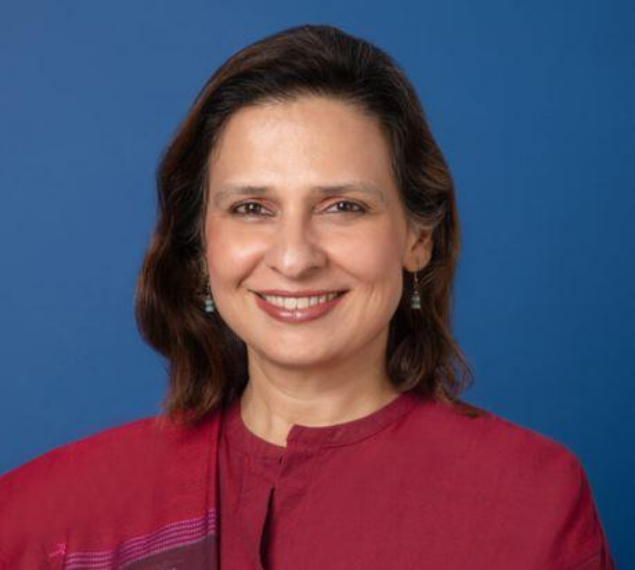
Tabinda Sarosh
PhD, BS
President and Chief Executive Officer, Pathfinder International
Dr. Tabinda Sarosh is Pathfinder International’s President and CEO. She has spent over two decades leading transformative initiatives that bridge public health, women’s and young peoples’ rights, and sustainable development. Leading Pathfinder from Karachi, Pakistan, Dr. Tabinda is Pathfinder’s first CEO based outside of the US. Her leadership is anchored by the belief that multisectoral partnerships and innovative business models are essential to tackling complex global challenges.
Dr. Tabinda combines experience as a public health practitioner and women’s rights advocate, with an in-depth understanding of how to deliver women’s health services across diverse contexts in Asia, the Middle East, and Africa. She has contributed to a number of national policy reforms for improved women’s health in Pakistan including advocacy efforts resulting in women’s health indicators becoming a part of the national health information system for the first time. She has been a strong advocate for grassroots movement building and a part of women’s rights movements across the Asia Pacific region.
Dr. Tabinda has a BS in medicine and surgery from Dow Medical College and a post-graduate diploma in nutrition. She is an alumna of the summer school on Women, Peace, and Security at the University of Leiden, Netherlands.

Joyce Y. Wong
BME, MSE
Professor of Biomedical Engineering and Materials Science, Boston University College of Engineering